Fantasy Football Draft Strategy From The 1.10: Justin Jefferson And Finding Zero-RB Targets
Chris Allen identifies the best strategy to take when starting from the 1.10 slot in fantasy football drafts.
If I have time, I try to get out to Gen Con in Indianapolis every couple of years. There are an infinite number of board games for me to play. I could eat Island Noodles every day. But my bank account (read: my wife) quickly reminds me I have other obligations. Anyway, the biggest detractor for first-timers is the lines. There are people everywhere. You have to plan around what you want to see and do.
Me? I don’t mind waiting in line. I’ll chat with a stranger or pop in my earbuds to catch up on my latest book (I’m about halfway through A Feast for Crows). All the while, I’m making mental notes, surveying the situation and planning out my next moves.
I approach drafting from the 1.10 the same way. Sure, I’m behind nine other people. But I’m using the time to form, break down and reform draft strategies. I not only have a while for my first pick, but an extended break after every even round. However, if I keep my thoughts on my surroundings, I can adjust my approach and keep my team in contention.
Draft Strategy From The 1.10 In 2026 Fantasy Drafts
Zero-RB Believers … This Is For You
Every year we find a few guys from the later rounds who flash enough talent for us to see them as future RB1s. They’re usually a part of committees. And if things were to break their way, we benefit. Last year was no exception.
Side note: watching this play in real time took years off of my life. That defense, folks. My goodness.
But, Bhayshul Tuten is now in early-round contention. That leaves us with the task of finding the next Tuten. The subsequent late-round RB(s) that can give us top-12 finishes if given the chance to shine. Luckily, we’ve got a way to narrow the field of options.
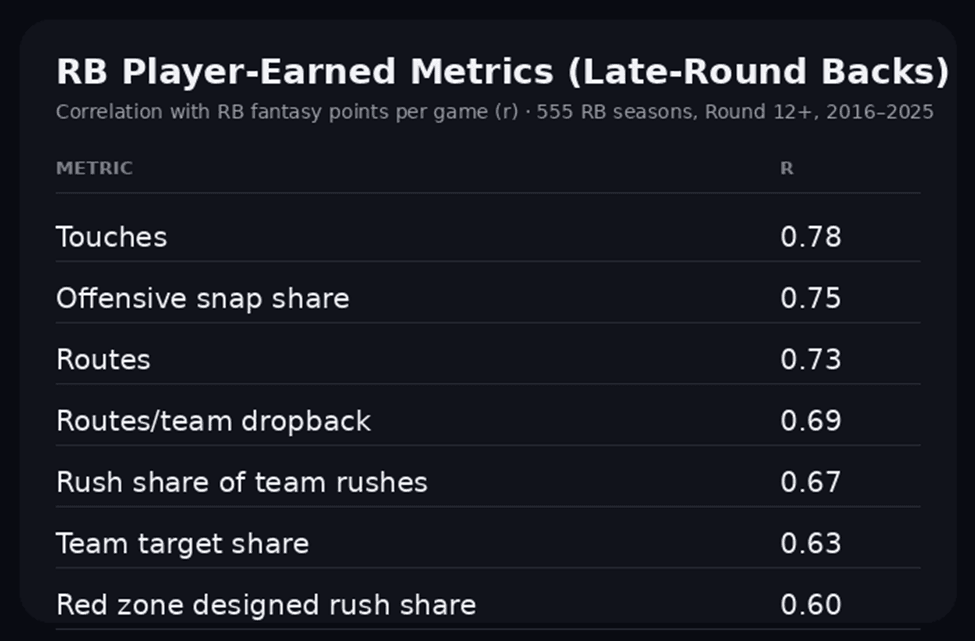
I used the same approach applied to identifying the overall RB1, but shifted my analytical gaze to the later rounds. Afterward, I don’t know what I expected. Of course, touches, targets, and high-leverage attempts would lend themselves to fantasy scoring. Essentially, the same things pulling our top-end rushers to more expensive draft costs are still relevant deep into the draft. Simply put, we’re looking for guys who can take on a larger role if given the chance. However, their ecosystem still has an impact.
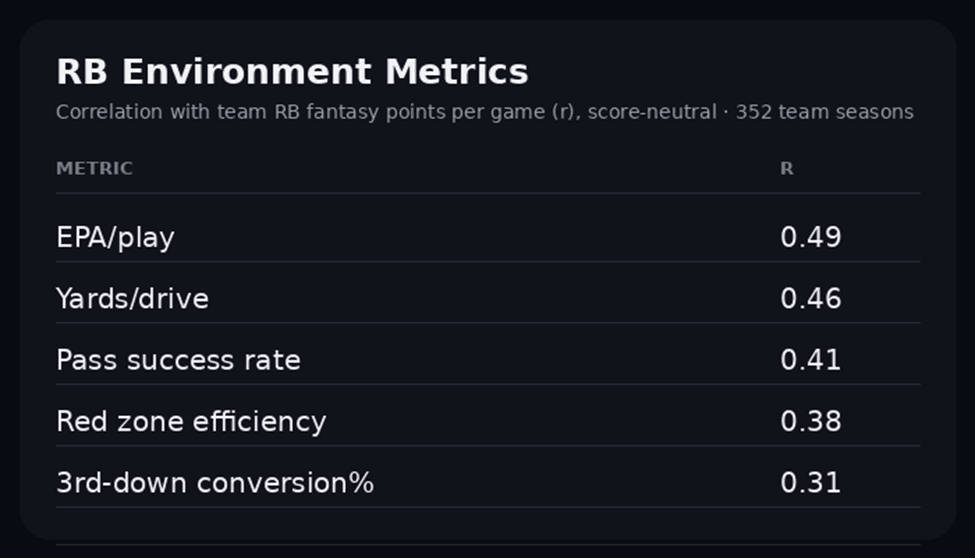
Team-level efficiency drives not just the number of attempts but their quality. Think about it. A struggling offense is less likely to find itself in their opponent’s red zone. Accordingly, any rusher would have fewer red-zone touches, limiting their outlook. Still, the larger piece is figuring out how much of this is sticky from year to year.
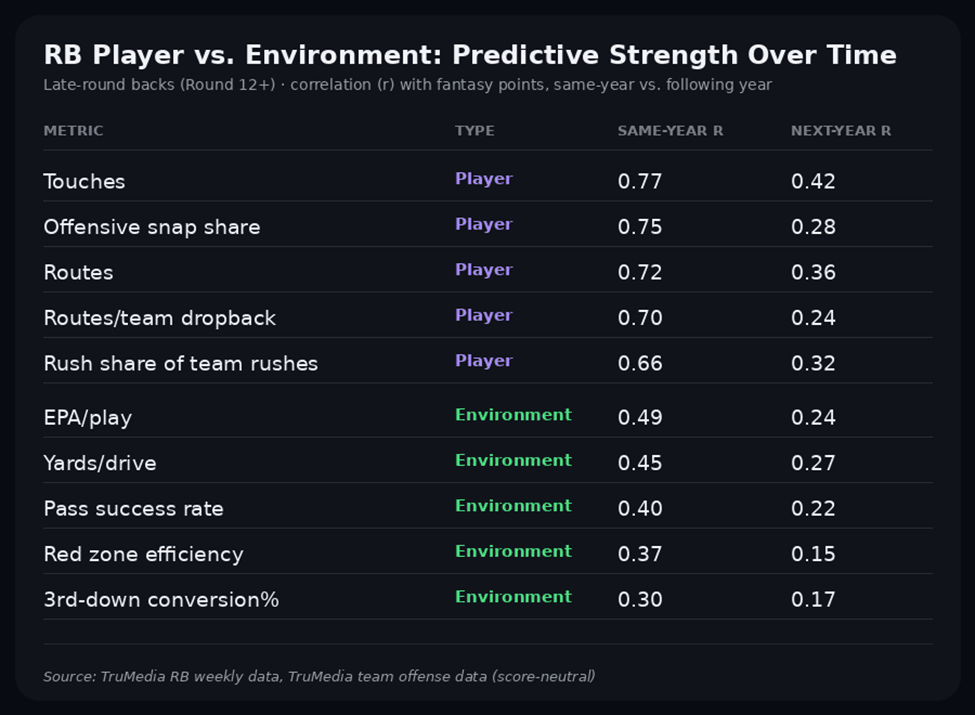
Situations will shift every season, causing the correlation coefficient to fall. But volume remains king. With all of these factors in tow, I mashed them all into a single composite score for each team. Unsurprisingly, the usual suspects headlined the list.
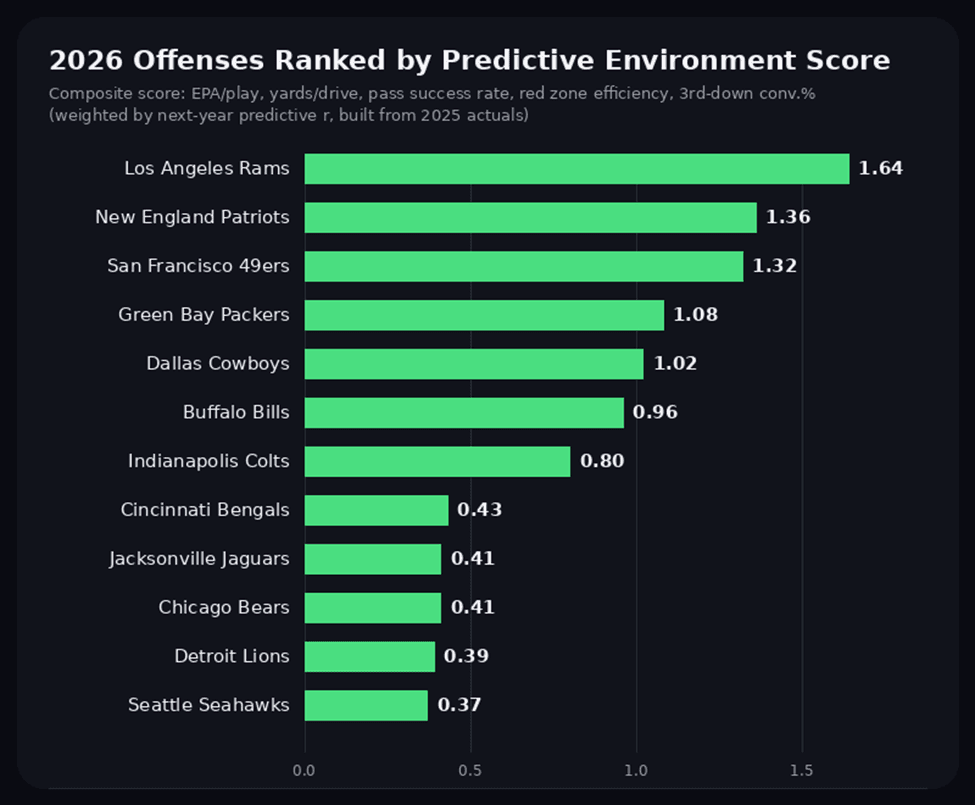
However, remember, we’re looking for late-round fliers. Jonathan Taylor, Kyren Williams, Christian McCaffrey and Javonte Williams (to name a few) are known quantities. Their backups, the guys with contingent upside, the ones we may only see for a few snaps a game, should be the rushers filling our bench spots. And with the above list of teams as a guide, a few names come to mind to earmark for the back end of your draft.
- Isiah Pacheco: 150.8 (Consensus ADP)
- MarShawn Lloyd: 177.4
- Jaydon Blue: 186.9
Let’s take a wider view of Pacheco’s workload for a minute.
- Rush Rate: 73% (2023), 55% (2024), 45% (2025)
- Target Share: 10%, 7%, 7%
- Goal-line Rate: 82%, 43%, 0%
I bring this up because our final view of the former seventh-rounder, and his departure from one of the best QBs in the league, has had some say in his current cost. Yes, Pacheco fell behind 31-year-old Kareem Hunt. Sure, his per-touch metrics were a yellow flag at best. But let’s also consider his situation.
The 2025 season came after his fibula fracture in September of the year prior. And even before he could get back to full form, Pacheco suffered an MCL sprain. Meanwhile, the Chiefs’ offensive line was dealing with injuries of its own.
I’m not saying Pacheco should be in a 50/50 split with Jahmyr Gibbs. However, assuming health, the double-digit-round gap between the two should be something drafters are willing to exploit should the Lions continue a similar division of labor between their RBs.
Now, let’s draft!
For reference, here’s the format I chose:
- 12 teams
- PPR
- 1QB, 2RBs, 3WRs, 1TE, 1FLEX, 1K, 1DST
You’re On the Clock With the 1.10!
As I mentioned in the intro, we can use our wait time to get on the clock, not just to whine about the players we won’t be able to draft (we can make fun of some picks, too), but to pinpoint our best option at the 1.10. I’ll use a mock I put together using our Draft Champion tool as an example.
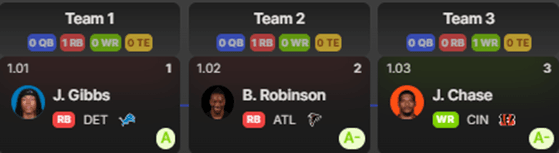
Nothing crazy about the first few selections. The simulator is largely following ADP and fantasy football projections, but I’d expect the same first three in any of my leagues. In either case, that leaves Christian McCaffrey, James Cook, and Jonathan Taylor as RBs I could take at 10th overall.
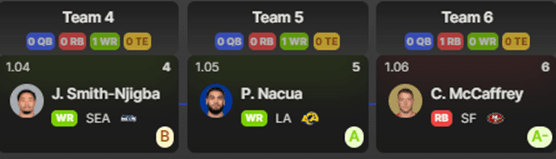
Jaxon Smith-Njigba before Puka Nacua? That’s a choice. Maybe the news about Nacua getting hurt in practice has them shook. The order doesn’t impact our eventual decision. But as if I’m at a poker table, I take note of teams who act outside of the norm. Their decisions could impact other drafters. More importantly, that’s another RB off the board.
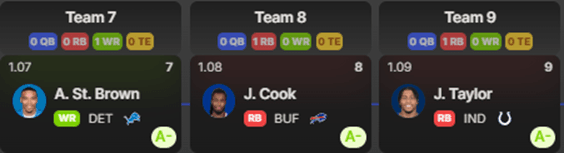
So, as Teams 7-9 make their picks, I’m mentally crossing off names. Again, the rushers were my focus. Cook and Taylor going in back-to-back picks exhausts my first-round RB list. I can snag any of Kenneth Walker, Saquon Barkley or Derrick Henry on the wrap. As a result, I’ve got my choice made as soon as I get on the clock.
Justin Jefferson’s talent as a receiver isn’t in question. Over the last three years, he’s finished inside the top 10 in yards per route run, target rate and air yards. The explosives (4th-most) help, too. But his QB quality tanked in 2025. J.J. McCarthy was 34th out of 35 qualifiers in EPA per dropback and passing success rate. The Vikings fell to the bottom 5 in yards per drive and EPA per play. And while it’s tough to project how Murray will perform, at the very least, his career indicates he can spin the ball better than his predecessor in Minnesota.
- (Career-weighted) EPA per Dropback: 0.05
- Passing Success Rate: 47.2%
- Sack Rate: 6.2%
Like the Bengals defense, I’m not asking for top-5 play. Let’s aim for league-average and hope for the best. But even if Murray can just keep the Vikings’ offense on schedule, Jefferson’s talent will remind us why he belongs in the first round.
Optimal Fantasy Football Draft Positions
The Rest of the Early Rounds From the 1.10
For draft slots biased toward the end of the draft, the decision point of taking a TE early (i.e., Brock Bowers) comes fast. We’ve discussed the merits. Go big or go home. But the starting roster requirement of two RBs and WRs had me rethinking my prioritization of TE.
- RBs: Javonte Williams, Josh Jacobs, Kyren Williams
- WRs: Tetairoa McMillan, Luther Burden, Jaylen Waddle
Of the receivers available, Waddle held the greatest interest. Burden is nursing an injury. McMillan’s situation drops him below the guys with a similar cost. On the other hand, I could lock up my other RB starter now. Even better, if I acted then, weekly usage would be less of a concern. The only time I’d have to move either rusher to my bench would be on their bye week. Kyren Williams or Javonte Williams fit the archetype. Plus, I was still able to grab a high-end TE in the fourth round.
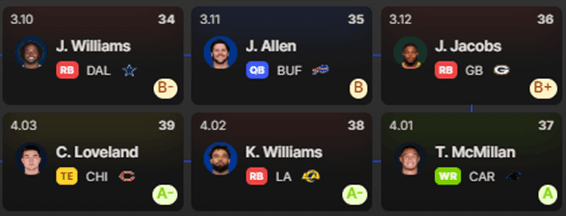
In essence, I’ve changed the “Anchor RB” strategy to “Anchor WR.” Jefferson has to live up to his ADP (in the event my other starters don’t break out) or my roster suffers. To minimize my risk, I added multiple receivers throughout the rest of the early and middle rounds for flexibility at the position.
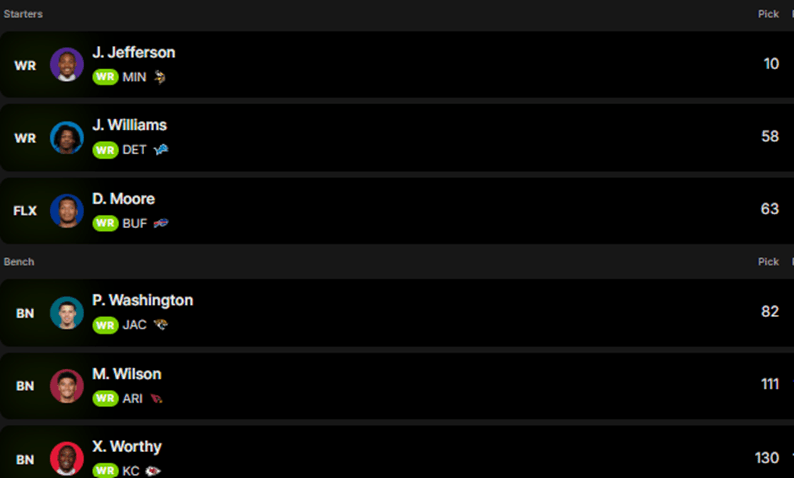
Late-Round Lessons for Fantasy Football Drafts From the 1.10
Despite having my RB1 and RB2, I still needed to plan for disappointment. Or, at least an absence or two due to their team’s bye weeks. I tacked Aaron Jones onto the roster, but he’s a temporary measure. Jordan Mason is right behind him. My stable needs upside or the potential for another top-12 rusher. Using the process we laid out earlier, my last two bench picks shouldn’t surprise you.
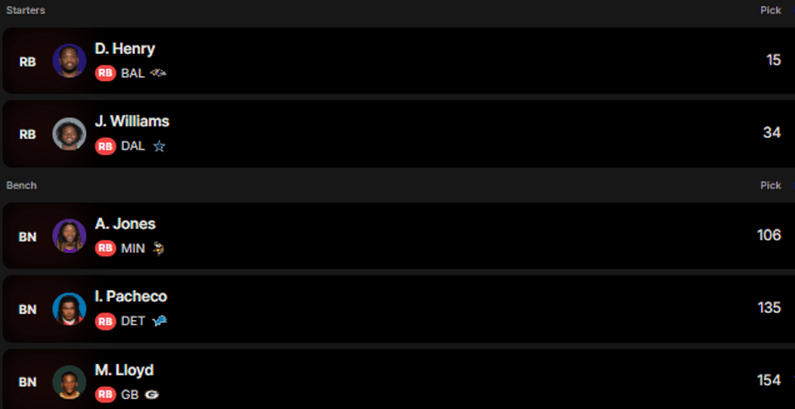
I’ve already waxed poetic about Pacheco. And I’ll admit that MarShawn Lloyd is yet to flash the same talent as Tuten or Pacheco. So, let’s focus on his situation instead.
- Yards per Drive (2021-2025): 7th
- EPA per Play: 4th
- Red Zone Plays: 4th
- Red Zone Pass Rate: 16th
Green Bay has been one of the better offenses over the last five years. The Packers' total play volume may be lacking, but the results have put them inside the top 10 across the board. The plus for Lloyd is the Packers’ penchant for relying on their ground game once they get into scoring position. So, Lloyd becomes a low-risk, high-reward selection without having to use small sample sizes to justify the pick.
Building a Championship Fantasy Football Roster When Drafting From The 1.10
Well, we made it. If I had to guess, the tool won’t look kindly on what we’ve done. Yes, we got an elite TE. But, in turn, QB took a back seat. Our plan at RB requires both health and prosperity. But let’s see how we fared.
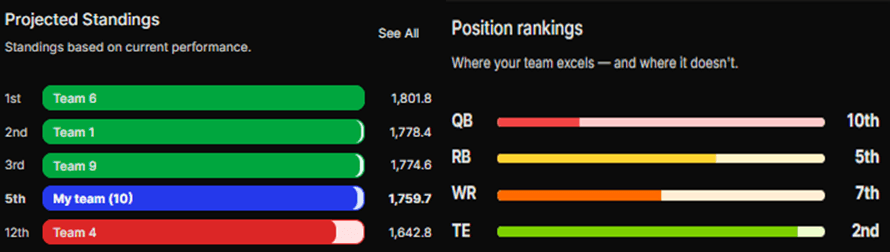
We’re bound for the playoffs, folks. However, season-long projections are fueling the prediction. Let’s look at the full roster to paint a more realistic picture.
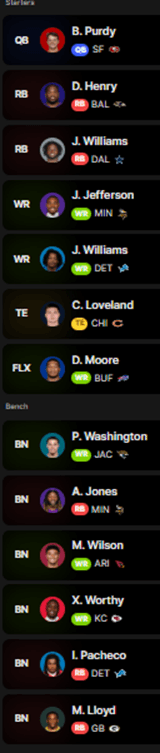
As I mentioned, our livelihood hinges on a few things being true. Along with our starting RBs staying healthy, their vice grip on their bell cow roles has to sustain, too. King Henry doesn’t have any concerns, but I’ve heard enough about Jaydon Blue and Phil Mafa to make me think twice about Javonte. That’s why I offered Kyren as a secondary option. Because, as we watch the draft unfold, identifying profiles to suit our roster needs and making backup plans is how we can best attack the 1.10.

Unlock Our Tools!
Stop hitting the paywall. FL+ gives you access to our premium in-depth content, expert rankings & projections, mock draft simulator, and all the tools you need – all personalized to your league.
Players Mentioned in this Article



Published Updated