IDP Fantasy Football Strategy: Advanced IDP Stats That Move The Needle
Mike Woellert dives one step deeper into how to leverage advanced data to inform your decision-making in IDP fantasy football.
You read the IDP Draft Guide and might dip your toe in. Maybe you’ve played IDP in the past and finished sixth, but loved the experience and learned a lot along the way. Either way, you’re back, and now you want to move past the basics. Welcome to the next level.
This is the stuff I wish someone had handed me five seasons in: the data points that actually predict next week, the schemes that decide who gets the tackles and the in-season habits that separate the managers who finish strong from the ones who watch their LB2 disappear in Week 6 with no plan.
I’m going to assume you already know snap share, the difference between tackle-heavy and big-play formats and what True Position means. If you don’t, go back and read Part 1.

Join Our Newsletter
Trusted by 400,000+ fantasy football players. Get access to Fantasy Life's free award winning newsletter and tools, all in one step.
By registering or logging in, you agree to our Terms of Use and Privacy Policy.
Advanced IDP Fantasy Football Strategy For 2026
The Advanced Stats That Actually Move The Needle In IDP
Raw tackles and sacks are the box-score noise. I mean, they’re important for fantasy as that’s where the points come from. The signal underneath is mostly four numbers.
Expected sacks. This is the metric to lean on hardest for edge rushers and pass-rushing DTs. PFF builds it off pass-rush snaps and a rolling three-year average of grade, win rate and pressure rate. It’s the most stable pass-rush metric year-to-year. I believe it’s more stable than sacks and playing time alone.
- The practical use: When a guy’s sack total badly lags his expected sacks, he’s a buy. When sacks badly outpace expectations, he’s a sell. Josh Hines-Allen has finished in the 90th percentile in expected sacks every year since 2023, while topping out at eight actual sacks the last two years. He’s coming.
Tackles vs. expected. Same idea on the tackle side. It accounts for snap count, defensive role, and scheme context, then tells you whether a guy is converting opportunities or coasting on volume. Jack Campbell has finished in the 90th percentile every year of his career; Patrick Queen routinely sits near the bottom despite playing every snap. If you’re choosing between two LBs with similar tackle totals, tackles vs. expected is usually the tiebreaker that wins.
Pressure rate vs. sack rate. Sacks bounce. Pressure rate stabilizes within four or five games. If you have a guy generating pressure on 14%+ of his rushes but only sitting at three sacks through six weeks, do not trade him. He’s about to pop.
Box snap rate. This is the single best DB stat I track. A safety lining up within eight yards of the line on 35%+ of his snaps has a path to tackle volume that a deep-shell free safety simply does not. When a new DC takes over, box snap rate is the first thing I check in Week 4. I think that’s about how long it takes for tendencies to stabilize.
Don’t just collect stats, but stack them. A defender I trust has three things lining up at once: role (snap share, box snaps, on the field on third down), opportunity (pressure rate, blitz rate, slot usage), and efficiency (pressure-to-sack conversion, tackles vs. expected). One out of three is a coin flip. Two out of three are usable players. Three out of three is a guy I’ll pay for.
Defensive Schemes: The Fangio Era
If you’re playing IDP in 2026 and you don’t know the Fangio coaching tree, you’re behind. Vic Fangio’s principles, split-safety two-high shells, disguised pressures, four-man rushes and sacrificing yards to prevent explosives, have quietly taken over the league. Christian Parker (Dallas), Jonathan Gannon’s staff in Green Bay and the entire Eagles defense all run flavors of it. Mike Macdonald’s Baltimore-tree variant in Seattle adds more simulated pressure and disguise but starts from the same two-high foundation.
What this means for IDP is concrete:
- Two-high shells push tackles back to the linebackers and box safeties. When both safeties are 12 yards deep at the snap, somebody has to make the run fit. That’s the off-ball LB and whichever DB is rotating down. Linebacker production in Fangio defenses is generally elevated.
- Four-man rushes elevate elite edge rushers and quietly hurt everyone else. If a defense isn’t blitzing, the LB sack upside dies. Micah Parsons in Gannon’s scheme will eat. The LB next to him may not see many free runs.
- Disguised coverage hurts DB interception volume but helps tackle volume for the guys rotating down. Brian Branch’s tackle floor in Detroit isn’t an accident — he’s the rotating piece in a two-high shell.
The counter-trend is the heavy-blitz defenses. Brian Flores in Minnesota, Todd Bowles in Tampa, Steve Spagnuolo in Kansas City. These shops blitz LBs and safeties at 30%+ rates and create big-play scoring opportunities everywhere. If your league rewards splash plays, target defenders in these schemes. Nick Bolton and Zack Baun-type guys. Players with the green-dot responsibility in a high-blitz defense can be difference makers.
The shortcut: in Week 4, pull up team-level pass rush rate, blitz rate and two-high coverage rate. Three numbers tell you almost everything about what your IDPs are going to score.
Who Wears The Green Dot
The linebacker position, in my opinion, is one of the most important for fantasy, and finding a dependable three-down linebacker is crucial.
The defender (usually the LB) wearing the dot is the QB of the defense, as he’s relaying the calls from the defensive coordinator. He’s getting everyone aligned pre-/post-snap. The green dot defender isn't coming off the field. In most defenses, as noted, it’s the LB. In the past, defenses have used a DB (safety) to wear the dot, but they’re more of an outlier.
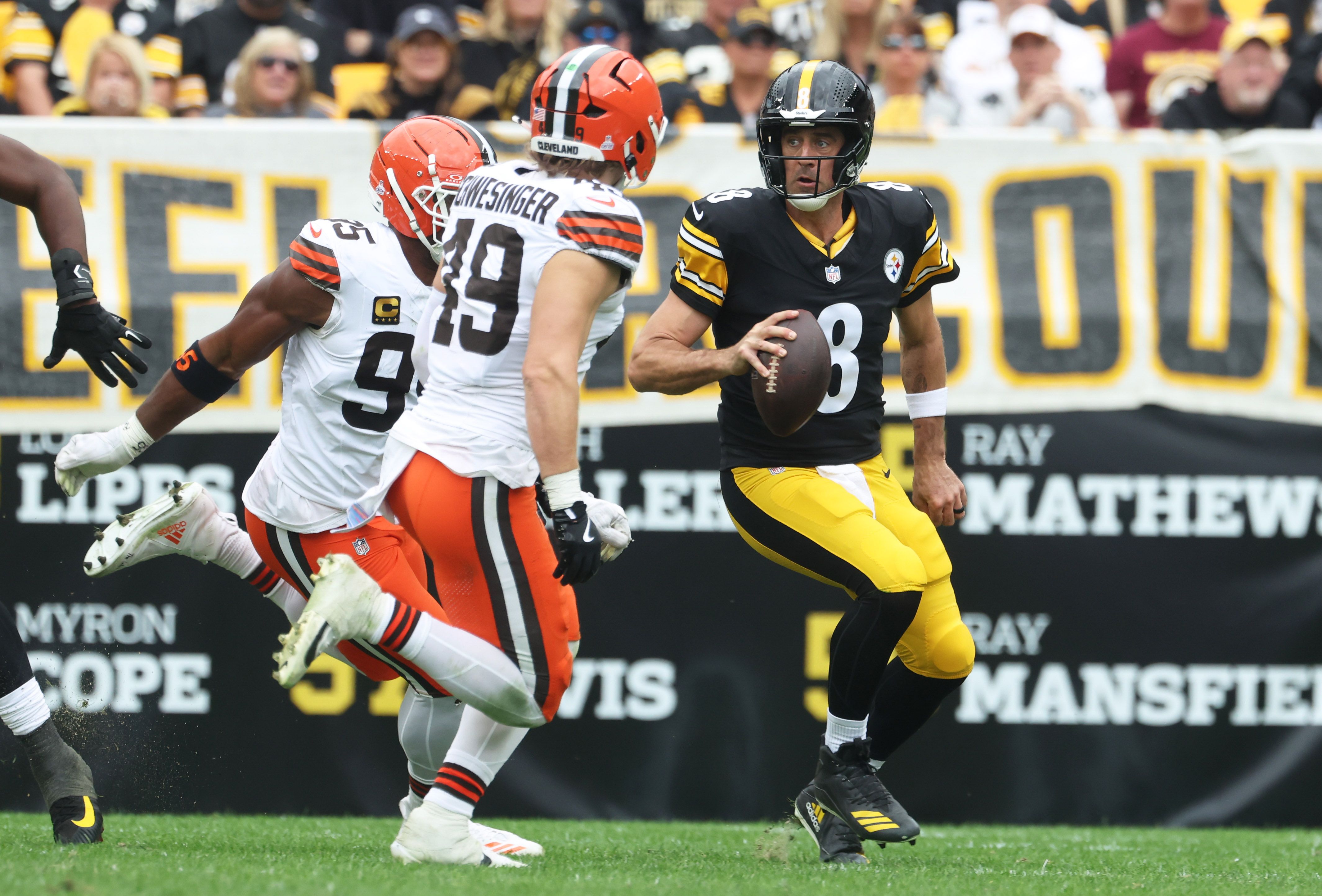
I’ll usually start paying attention to the dot during OTAs, and then when training camp starts in August, that's when I key in on the dot. The green dot role matters more than the guy who’s in great shape.
Heading into 2026, there will be a few situations to monitor: Dallas, Carolina, New York (Jets), Indianapolis and Washington. Sonny Styles has been seen with the dot in Washington’s OTAs, and there’s an assumption that CJ Allen will wear it. These are two rookies with the potential for a three-down role as a rookie.
Defensive Rotations Are The Hidden Killer In IDP Fantasy Football
Defensive linemen rotate more than any other position. This isn’t new, but the gap between the every-down DL and the situational pass rusher has widened. Maxx Crosby plays 85%+ of snaps. Nik Bonitto, for all his sack production, was around 61% for most of 2025. In a tackle-heavy format, that’s a real difference; in a big-play format, it’s not.
What’s new in 2026: more teams are rotating their interior DL aggressively. Even Chris Jones is under 70% snap share now. If your league requires a DT, you have to factor rotation into projections. Jeffery Simmons and Jalen Carter are the rare interior guys playing 75%+. Almost everyone else is a snap-share question mark.
The LB rotation story is different but just as important. Watch for the dreaded “rotational LB2”—a team that splits snaps between two off-ball LBs nobody can quite trust. Carolina did this with Rozeboom for a stretch in 2025; the Jaguars did it with Devin Lloyd. If a team is rotating its LB2, neither guy is startable in 12-team leagues.
In-Season IDP Strategy: The Set-It-and-Forget-It Lie
Every preseason article tells you to draft IDPs you can set and forget. That’s true for your LB1 and LB2. For everyone else, the matchup game matters a lot more than people admit.
Here’s how I run my IDP in-season process:
Monday/Tuesday: review snap counts. Pro Football Reference posts them on Monday nights. I’m looking for anyone on my roster whose snap share dropped 10%+ versus their season average; that’s a pending demotion. I’m also looking at the waiver wire for anyone who jumped 15%+ on the back of an injury or rotation change. Snap share trumps box score every time.
Wednesday: check the matchup column. I want to know which offenses are funneling work to my position. Tackle-friendly matchups for LBs are run-heavy offenses with bad offensive lines. Sack matchups for edges are pass-heavy offenses with a vulnerable tackle. 4for4’s Team v. Position Tackle Data is the one external resource I check every week without fail.
Thursday: stream the bottom of my lineup. If I’m starting three LBs and my LB3 is a snap-share question, I’ll trade him out for a 70%-snap guy facing the Bears. Streaming DEs in big-play leagues against the Texans or Browns offensive lines has won me more weeks than any draft pick ever did.
Sunday: don’t get cute. I made this mistake for years. Once your lineup is set, leave it alone. The Sunday morning panic move is almost always wrong.
The IDP Waiver Wire Is Where Leagues Are Won
I don’t draft handcuffs (we covered that in Part 1) because the waiver wire is too good. The IDP wire churns harder than any offensive position. A starting LB gets hurt Sunday; his backup is sitting on the wire Tuesday with three weeks of green-dot snaps in front of him. The managers who hit on those grabs are the ones who win.
A few rules I live by on the wire:
- Drop the name, keep the role. If I have a “name” LB whose snap share has slid under 60%, I drop him for a no-name three-down guy in a heartbeat. The role wins.
- Don’t chase last week. A guy with 14 tackles and a sack who only played 25 snaps is a trap. Snap share is sticky; box scores aren’t.
- Stash injury replacements aggressively in deep leagues. Rookies get on the field faster on defense than on offense. Barrett Carter took over for Logan Wilson in Week 6. He was a three-down LB for the rest of the season. Could someone like Jacob Rodriguez be that guy this season?
A Few Final IDP Fantasy Football Habits to Adopt
Subscribe to a few IDP-specific newsletters or Substacks. The advantage you get from someone who watches All-22 every week and posts snap-rotation notes on Tuesday morning is enormous, and most of it is free.
Track your league’s tendencies. After two years in a league, I know which managers panic-drop after a bad week, which ones overvalue rookies and which ones will trade a useful LB for a backup RB. That intel is worth more than any ranking.
And keep watching the games. I know that sounds basic, but the manager who sees Quinyon Mitchell rotating down to nickel for two drives in Week 7 is the manager who claims him off the wire before anyone else notices.
Have fun. IDP rewards work, but it rewards curiosity more. The deeper you go, the more you’ll see, and the more fun the season gets.
Join Our Newsletter
Trusted by 400,000+ fantasy football players. Get access to Fantasy Life's free award winning newsletter and tools, all in one step.
By registering or logging in, you agree to our Terms of Use and Privacy Policy.
Published